Category Archives: Historical Fiction

Exclusive Preview: The Pendle Witch Girl

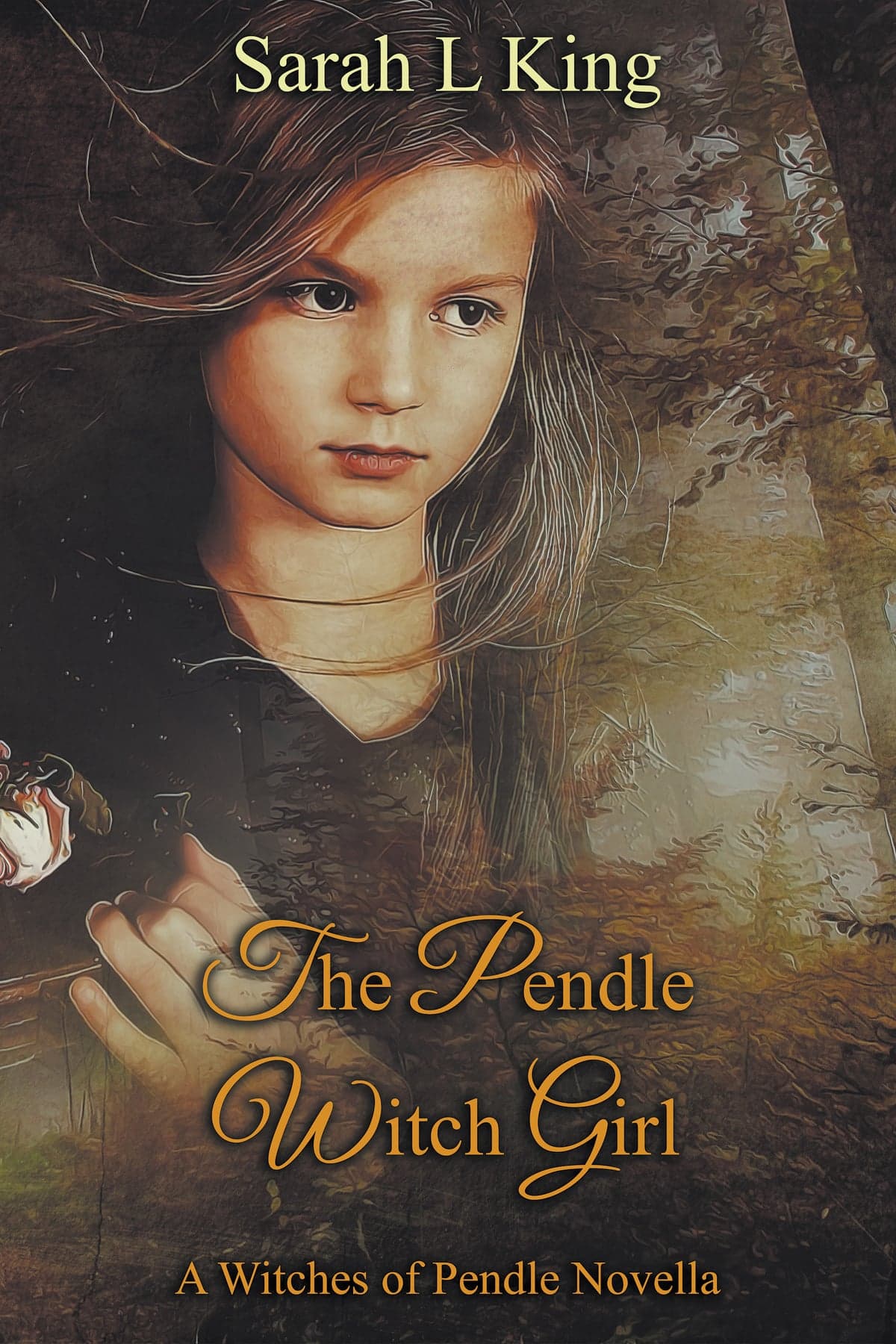
In one week the third installment of the Witches of Pendle series, The Pendle Witch Girl, will be released. Today I am delighted to publish an extract from the book – I hope very much that you all enjoy it!
Prologue

Spring 1609

‘Crumbling Stones’

“Ouch!” Jennet exclaimed as she scraped her knees across the large stones which were strewn across the ground. These piles of rubble were all that remained of the back wall of the out-building now; last winter had been harsh and the old walls hadn’t had the strength to resist the relentless frost and biting wind. One day, just after fresh snow had fallen on to the frozen ground, she had wandered outside and round the corner as she usually did and the wall had gone. Just like that – gone.  It shouldn’t have been a surprise, really. For as long as Jennet could remember, the building had served no purpose other than to sit there, crumbling. She had asked her mother and grandmother repeatedly what it was for and both had shrugged, claiming not to know. Even when she badgered them for an answer, both continued to plead ignorance. She found adults so irritating when they were evasive like that; they probably did know and they just didn’t want to tell her. Who cares about old buildings and their uses when you’ve grown-up things to worry about?

Still, Jennet felt sorry for the old stone hut, sitting there all alone and falling apart. She decided that if the rest of her family weren’t interested in finding a use for it, then she would take it upon herself to do so. She would give it a purpose. Last summer, it had been her den, a little house all of her very own, but now that the back wall had gone it didn’t make a particularly good or cosy home any more. This spring, she decided, she would play on the rocks instead. That had seemed like a good idea until just a few minutes ago, when she had scraped her knee. Now she had drawn a little blood and her knee ached.

“Mama!” she shouted as she ran back towards her house. She ran inside and slammed the heavy wooden door of Malkin Tower behind her. “Mama!” she called again. “I’ve hurt my knee! Can you look?”

Slowing her pace and feigning a slight limp, Jennet walked to the back of their cottage, where her mother was sitting in the kitchen near to the hearth, chattering away with her friend, Jennet Preston. On Jennet’s lap sat her daughter, Bess, who was wriggling around, dribbling over a piece of soggy bread. Jennet shot the child a disdainful glance.

“Mama, I’ve hurt my knee,” she repeated, offering up her leg for her mother’s examination. There was quite a lot of blood now; it had trickled down her shin and settled on her ankle, where it had begun to dry.

Elizabeth Device wasn’t amused. “It’s nothing, Jennet. Bit of blood is all. No need to make such a fuss,” she said, sharply. “Honestly, you’re eight years old and still acting like a baby!”

“Shouldn’t Grand-mama have a look?” Jennet asked, deciding to pursue the matter of her injured knee and ignoring her mother’s jibe. “Grand-mama is good at mending people,” she added, smiling at Jennet Preston.

Jennet Preston returned the child’s smile. “Yes, your grandmother is good at a great many things,” she replied affirmatively. “You are very lucky to have her.”

“Grandmother’s sleeping,” her mother replied. “Please don’t wake her. Now, go and play, Jennet,” she added, gently but insistently.

“I’ve no one to play with!” Jennet whinged. “James and Alison are both out, and even when they’re here they don’t want to play with me. They think they’re grown up now, too. Everyone’s a grown up except me!” She gesticulated wildly with her arms for dramatic effect. It was a fair point, she thought. Her brother and sister really did think they were too old for her games.

The two women simply laughed at Jennet’s outburst. “What a lass you are,” her mother said, rubbing her hair affectionately. This gesture was intended to offer comfort but Jennet only found it infuriating.

“Can Bess come and play with me?” Jennet asked, glancing warily at the drooling child. Bess’s face was always wet and she couldn’t talk much yet, but she could walk and that meant she would do for a friend, for today at least. Maybe Jennet could teach her to climb on the rocks carefully without scraping her knees.

Jennet Preston chuckled. “Bess is too little, Jennet,” she replied gently. “In a few years when she’s grown a little more, I’m sure she will be your very best friend. Just like your mama is my closest friend,” she added, giving Elizabeth Device a warm smile.

“I can’t wait that long,” Jennet answered rudely. She paused for a moment, allowing the two women to stare at her with confused faces. Jennet enjoyed moments like this, when adults stopped talking about boring things and listened to her. “By the time Bess is old enough to play with me, all the walls on my house will have fallen down and there will be nothing left. I won’t need a friend then, if there’s nothing left to play with.”


Later that day, Jennet watched from behind the front wall of her house as Jennet Preston and Bess finally left. She took care to make sure that she wasn’t seen; she liked the sense of watching other people without being spotted. Her brother James had once remarked that she was so good at it, perhaps she could go and spy for the King! The King indeed! James could be so silly at times. What would the King want with a little girl from Pendle?

Jennet watched her mother’s friend as she carried her daughter down the hill and disappeared into the distance. She liked Jennet Preston; she was always kind and friendly to her, but she talked a lot which was no use if Jennet wanted to speak to her mother. With Jennet Preston around, she could never get a word in edgeways. A couple of years ago, which felt like a long time ago to Jennet, her mother’s friend had lived at Malkin Tower for a little while. Jennet had quite forgotten all about it, and perhaps would have forgotten forever if her sister Alison hadn’t reminded her. Alison liked to talk about people she knew and everything she knew about them, especially if she knew bad things. As young as she was, Jennet knew that if you wanted to know about something bad, you could go to Alison and she would tell you.

“Do you know why Jennet Preston lived here?” Alison had asked mischievously once she knew that her little sister was hanging on to her every word.

“No. Why?” Jennet had replied, her eyes wide with wonder.

“Because she had to run away when everyone in Gisburn found out that she was having Master Lister’s baby,” Alison answered, her tone matter-of-fact but catty.

“Who’s Master Lister?” Jennet had asked innocently.

“A gentleman,” Alison replied, tossing her head sharply, as though to emphasise the importance of this man’s rank. “And he wasn’t her husband. Jennet Preston seduced a gentleman, can you imagine it?” she added with a giggle.

Jennet had been confused. She didn’t really understand a lot of what Alison was telling her, but guessed that this Master Lister must have fallen in love with kind, smiling Jennet Preston. That was quite clever of Jennet, she thought, to make a gentleman fall in love with her.

“How did she do that?” Jennet asked.

“Who knows,” Alison replied. “Maybe she bewitched him!” she added with a mischievous cackle.

“Alison! You can’t say things like that!” Jennet exclaimed.

“Why not?” asked Alison with a casual shrug. “I only mean that she might have cast a love spell. People do spells all the time, for all sorts of things. Look at what Grandmother does. She’s started teaching me too, so that I might know spells and remedies for everything, just like she does.”

“Can I learn?” Jennet asked eagerly.

“When you’re much older,” replied Alison haughtily. “And only if you have the gift. Not everyone has the gift, you know. Even if you do have it, Grandmother will want to be sure that you won’t use it for ill-wishing before she’ll teach you. Ill-wishing is witchcraft.”

“I would never do anything bad!” Jennet exclaimed. “I only want to mend people, like Grand-mama.”

Despite her pleas, neither Alison nor their grandmother had checked to see if Jennet had the gift. Alison didn’t share any of her learning with her younger sister, and no amount of prying or pleading could persuade her to loosen her tongue. Now, sitting in her crumbling den, Jennet was reminded of how much she wanted to have her grandmother’s gift and some of her powerful knowledge. She realised, however, that she could still pretend. She could make up her own spells in the safety of her den and pretend that she was turning milk to butter, or making ale taste better. She’d no use for love spells yet, but she could pretend to cure a few sick animals. If she pretended to do all these things now, she was sure that when her grandmother decided she was old enough to learn properly, she would be even better prepared than Alison.


It was almost dark when Jennet decided to venture back indoors that evening. She had been so absorbed in her game of magic that she hadn’t noticed the fading light. She approached the door of Malkin Tower with some trepidation, feeling certain that her mother would be waiting behind it, armed with some harsh words and a cross expression. Carefully, she opened the door, trying to prevent it from creaking so that she could sneak in without drawing attention to herself.

To Jennet’s surprise, however, the sound which greeted her was not her mother’s scolding tone but raised voices coming from the back of the house. Unable to dissuade her curiosity, Jennet crept towards the kitchen and hid around the corner, close enough to hear but out of sight. She immediately recognised the two voices as those of her mother and Alison. She sighed disappointedly. Arguments between her mother and Alison were nothing new; Alison was forever disappearing into the countryside for hours on end, and her mother never knew what she was doing or who she was with. She was about to lose interest and walk away from her hiding place, when something Alison said caught her attention.

“You know what John Robinson says about you?” Alison asked her mother. Even from her hiding place, Jennet could sense the vindictiveness in her sister’s tone. She shuddered. She hated it when Alison behaved like this.

“No, Alison,” her mother sighed in reply. “Tell me, what does he say?”

“He says you’re a whore,” Alison spat. “He knows that you had a child with Richard Sellers when my father was still alive.”

“Yes, I’m sure he does know that, Alison,” replied her mother, forcing her tone to remain even through gritted teeth. “I’m sure everyone round here knows that. You’ve known about it yourself for a few years now, and I really wish you’d stop bringing it up. She’s your sister, Alison.”

Jennet’s interest began to dissipate. Her mother was right; Alison was always bringing up the fact that she and Jennet had different fathers. Like Alison, Jennet knew that Richard Sellers was her father, and that she only had the Device name because her mother chose not to mark her as different from her siblings. None of this was anything new. She thought about leaving her hiding place again. Perhaps she could go and find her grandmother, or James.

“How do you feel about people calling you a whore, mother?” Alison demanded, recapturing Jennet’s attention with her raised voice. “Does it not make you angry? Does it not make you ashamed?”

“Ashamed? Never!” said her mother in response, her voice growing louder now as she became angrier. “No one can understand my actions, no one can understand how I felt at the time, and no one should judge me!”

“So it makes you angry?” Alison goaded. Jennet could sense the pleasure she was taking in riling her mother. She shuddered again, feeling glad now that she was still hiding.

“Yes it makes me angry! A pox on John Robinson, and his brother too! A pox on them both!” her mother screamed.

Silence followed. To Jennet it was a long, worrying silence, since from her hiding place she couldn’t see what had happened. Stealthily, she crept towards the door and peered round into the room. There, she could see her mother, sat down, the dog they called Ball spread across her lap. Ball must have come in for scraps before the argument had ensued. Poor Ball, thought Jennet, caught in the middle. He didn’t even live here really; he just came in when he felt like a meal and a fuss.

“It’s alright Ball,” she could just about make out her mother’s muttering. “It’s alright. We’ll show them, won’t we? We’ll teach them to hold their nasty tongues. I curse the Robinson brothers. I curse them both.”

Jennet gasped. This was the first time she’d heard her mother speak in that way. She tiptoed away from the doorway, unseen, and went through to the bedroom where she slipped silently under a blanket. She didn’t feel like eating now, she didn’t want to see her mother; she just wanted to hide away. After a while she fell into a restless slumber, disturbed by the thought that her mother had just wished away two lives, that the Robinson brothers might suffer dreadful deaths as a result of her words. Tossing and turning, she cried out in her sleep, her dreams plagued by images of death and suffering. In the middle of the night, surrounded by darkness, Jennet awoke suddenly, a sharp gasp of air escaping from her lungs as she sat up straight. In the pitch black silence, a terrible thought suddenly occurred to her. If her mother had the gift, she realised, then she had just used it to ill-wish someone, to throw a curse upon them. Alison’s words rang in her ears. Ill-wishing is witchcraft.

Jennet gulped hard. Had her mother just done the work of a witch?

The Pendle Witch Girl will be released on 18th August 2018 and will be available in e-book and paperback from Amazon, Kobo, Smashwords, iTunes and Barnes & Noble.


Spreading the Word

Whilst all writers have their own hopes, dreams and aspirations, I think it is fairly safe to say that there are a few things which appear on all of our wishlists. Whether we are writing our first book or our fourth, we toil night and day, agonising over our creative efforts before eventually summoning the courage (after seemingly endless rounds of editing and proofing) to put our work out into the world. At that point, I think there are four things we all wish for:

  1. That readers buy the book.
  2. That readers read the book and enjoy it.
  3. That readers rate/review the book on Amazon, Goodreads etc.
  4. That readers tell a friend, family member, colleague or other acquaintance about the book.

I don’t think I’m going out on a limb to say that these four wishes are important to any author writing in any genre, whether they are traditionally published, crowdfunded, or self-publishing. For the indie author, those last two wishes are particularly vital. Most indies, myself included, don’t have vast marketing machines behind them, or enormous budgets with which to procure such resources. Most indies rely on the internet, on social media, on reviews, on shares and ratings and that great old-fashioned thing, word of mouth, to maintain their book’s profile far beyond that initial burst of sales which comes with release day.

Why am I talking about this? Well, today I decided that I would write a post which plays my part in this. I am a writer but I am also a reader too, and over the past few years I have read some truly wonderful books by independent authors. Today I thought I would turn the spotlight on to them, tell you a little about their work and where you can find it. It’s all part of spreading the word!

K.J Farnham

K.J Farnham writes women’s fiction and contemporary romance. Her work includes her Click Date Repeat series and her most recent release, A Case of Serendipity. K.J has also written a YA novel, Don’t Call Me Kit Kat. I’m an avid reader of K.J’s work and have reviewed a number of her books on my blog (see here, here and here). If you like light, funny and enjoyable reads which will make you smile and lift your spirits, K.J’s romance novels are probably for you.

Find out more about K.J here.


Hillary DeVisser

Hillary DeVisser writes women’s fiction and romance. Her Coal Country series, which includes the books Fishing Hole, Copper Creek and Poets Pass, follows the fortunes of family and friends in a small mining town in Southern Illinois, where lives are not simple and there is always a good dose of suspense to be found. I read these books consecutively and just couldn’t put them down. If you like heartfelt, romantic reads which will have you clutching your chest at times, DeVisser’s books are probably for you.

Find out more about Hillary here.


Fiona MacBain

Fiona MacBain writes in the thriller, suspense and crime genres. Her books are one of my more recent discoveries, in fact it was only last week that I reviewed her second novel, Glasdrum, a crime thriller set in the Scottish Highlands (you can read my review here). In the past couple of days I finished reading Fiona’s first novel, the pacy women in jeopardy thriller Daughter, Disappeared set in Tunisia (review for this one is still to come). Both novels are gripping, exciting reads with unpredictable plots, and intriguing, challenging and at times downright grisly characters. If you like absorbing thrillers which you can’t put down, Fiona’s books could well be for you.

Find out more about Fiona here.


Campbell Hart

Campbell Hart writes crime fiction and noir, and has more recently released collections of ghost stories. His Arbogast trilogy, comprised of the novels Wilderness, The Nationalist and Referendum are crime novels set in central Scotland all featuring his gritty and completely unforgettable protagonist, DI John Arbogast. Campbell’s Arbogast books were one of my first forays into reading crime fiction and discovering that I did indeed enjoy the genre. The plots were framed within the context of recent memorable events in Scotland, from the freezing winter of 2010 through to the eve of the Scottish Independence Referendum in 2014, making them immediately relevant and relatable. If you like well-constructed and engaging crime fiction, Campbell’s books might well be for you.

Find out more about Campbell here.


Marissa Campbell

Marissa Campbell writes historical fiction and contemporary romance. Her first novel Avelynn was published by St Martin’s Griffin and she has since gone on to self-publish a second novel in the series, Avelynn: The Edge of Faith, as well as a contemporary romance novel. The Avelynn books are epic adventures of magic, faith and survival in the dangerous and superstitious world of ninth century England and Wales. This wasn’t a period I was particularly familiar with before picking up these books, but Marissa’s spell-binding prose and memorable characters really brought it to life for me. If you like gripping historical fiction with a touch of the otherworldly, Marissa’s books are probably for you.

Find out more about Marissa here.

So, over to you! Tell me and your friends about your favourite indies by commenting here, or sharing this post and commenting on your own social media channels with the hashtag #SpreadTheWord


The Pendle Witch Girl: Cover & Blurb Reveal!

Today I am delighted to reveal the cover and blurb for my forthcoming novella, The Pendle Witch Girl. This third installment of the Witches of Pendle series revisits the infamous trials of 1612, focusing on the childhood story of Jennet Device, an impoverished and impressionable young girl who finds herself at the very centre of Pendle’s first witch hunt, with tragic consequences.

The Pendle Witch Girl will be released in ebook and paperback format on 18th August 2018 – the 406th anniversary of the start of the trials in Lancaster.

What should you do when you discover that you’re the child of witches?

This is the predicament which faces Jennet Device. An illegitimate and lonely child, Jennet can only look on in horror while her family engage in the dark side of the folk magic learned from her grandmother, the notorious cunning woman known as Old Demdike. As terrifying tales of bewitchment and murder sweep through the Forest of Pendle, Jennet is forced to realise the power of their vengeance, and her powerlessness to stop it.

When her family’s practices come to the attention of the local sheriff, Jennet suddenly finds herself at the centre of a witch trial which could destroy them all. The little girl from Pendle is now the court’s star witness, and she has a terrible choice to make: can she bring herself to lie to protect them, or find the courage to tell their stories to the world even if it could cost them their lives?

Book Announcement: The Pendle Witch Girl is coming soon!

It’s that time of year when summer has finally arrived and everyone gets ready to jet off on their summer holidays. In Scotland we have been enjoying something of a heatwave recently, basking in sunshine and unusually high temperatures. After a seemingly endless freezing and snowy winter it has been mostly welcome, although I have heard a few people whispering that it’s too hot but not daring to say it too loud, presumably for fear that the dreaded snow might return.

So, whilst Scotland hasn’t quite looked like the photo above, it’s certainly been a welcome change. I will be taking a break from writing for a couple of weeks, as the arrival of summer also means that it’s time to take a break and spend some quality time with my family, especially my kids who are now on summer break from school.

However, before I sign off for some much-needed rest and relaxation, I would like to share some book-related news with you all. I’m very excited to announce that The Pendle Witch Girl, the third book in my Witches of Pendle series, is set for publication mid-August. At the end of July I will be announcing the exact release date and revealing the blurb and cover. In the meantime, however, The Pendle Witch Girl now has its own page on Goodreads, so please do head over there and add it to your ‘to be read’ list.

I wish you all a pleasant and enjoyable summer, with lots of sunshine wherever you are!!

Book Review: The Wages of Sin by Kaite Welsh

Sarah Gilchrist has fled London and a troubled past to join the University of Edinburgh’s medical school in 1892, the first year it admits women. She is determined to become a doctor despite the misgivings of her family and society, but Sarah quickly finds plenty of barriers at school itself: professors who refuse to teach their new pupils, male students determined to force out their female counterparts, and—perhaps worst of all—her female peers who will do anything to avoid being associated with a fallen woman.

Desperate for a proper education, Sarah turns to one of the city’s ramshackle charitable hospitals for additional training. The St Giles’ Infirmary for Women ministers to the downtrodden and drunk, the thieves and whores with nowhere else to go. In this environment, alongside a group of smart and tough teachers, Sarah gets quite an education. But when Lucy, one of Sarah’s patients, turns up in the university dissecting room as a battered corpse, Sarah finds herself drawn into a murky underworld of bribery, brothels, and body snatchers.

Painfully aware of just how little separates her own life from that of her former patient’s, Sarah is determined to find out what happened to Lucy and bring those responsible for her death to justice. But as she searches for answers in Edinburgh’s dank alleyways, bawdy houses and fight clubs, Sarah comes closer and closer to uncovering one of Edinburgh’s most lucrative trades, and, in doing so, puts her own life at risk…

I came across the Wages of Sin some time ago and, intrigued by its setting and subject matter, put it on my long ‘to be read’ list. Then, a few weeks ago I was fortunate enough to hear author Kaite Welsh read from her book at a Noir at the Bar event in Edinburgh. I loved what I heard so much that I went home and started reading this book straight away – a decision I’m glad I made, since I absolutely adored this story.

The tale is a first person narrative, told from the point of view of Sarah Gilchrist, a young woman with a difficult past who is determined to become a doctor, despite the barriers and social stigmas of the late Victorian society she inhabits. Welsh’s Sarah is well-drawn; she is brave, resilient and just the right amount of vulnerable. As a reader it was very easy to get inside Sarah’s head and to see her world as she saw it – as frustrating as that was, at times! There are some great supporting characters too, from the brooding Professor Merchiston to the catty and snooty Julia Latymer. Welsh does an excellent job of making even the most unlikable character a touch sympathetic, whilst ensuring that in terms of the mystery, the reader remains as blind to their worst flaws and darkest secrets as Sarah is, until that crucial moment when the truth and the killer is revealed…

The setting for the story is 1890s Edinburgh, and Welsh does a masterful job of evoking the sights and smells of the ancient city, thick with slums, and contrasting this with the orderly and more privileged (but no less debauched) new town. As a piece of historical fiction this novel is superb, with Welsh firmly setting Sarah’s sleuthing tale in the context of the time, tackling issues from poverty and deprivation, to the social conflict surrounding female emancipation and sexuality with impressive sympathy and accuracy. At times it was hard not to feel as though I had been transported back to 1892!

A highly enjoyable read – I am looking forward to the next installment in the series already. Five stars.

Awesome Authors of the Womankind

Today is International Women’s Day, a day which commemorates the women’s rights movement around the globe. It is also known as the United Nations Day for Women’s Rights and International Peace – two very big and very pertinent topics in these turbulent, unpredictable and sadly occasionally regressive times. The 2018 International Women’s Day campaign theme is #PressforProgress, a timely reminder that there is still much to do in terms of achieving gender parity across the globe. It is important, I think, to celebrate our considerable successes, and 2018 marks one of the biggest achievements of women in 20th Century Britain with the centenary of some women gaining the right to vote. But it is equally important to be reminded that there is more work to be done – the recent #MeToo, #TimesUp and gender pay gap campaigns can attest to that.

While we are talking about reminders, it feels like a good time to mention that I’m still accepting submissions for the Women’s Suffrage Anthology I plan to put together this year. The deadline for submissions is April 30th, so don’t delay! Find out more here.

It also feels like an appropriate day to talk about influential, inspiring women! There has been a great deal of discussion about this in recent weeks, with media and news outlets running features and polls and creating lists of female greats from the arts, politics, history and other cultural icons. In keeping with this spirit I thought I’d put together my own list, specifically focused on some of the female writers, past and present, who have inspired me on my own journey:

Philippa Gregory

The Queen of Historical Fiction is one of my all-time favourite authors. Without a doubt Philippa Gregory was the writer who inspired me to embark on my own journey into writing historical fiction. Her keen eye for historical detail and deep understanding of the characters she portrays sets an extremely high standard for literature and, in my opinion, has helped to raise the reputation of a genre which was often dismissed as whimsical.

Virginia Woolf

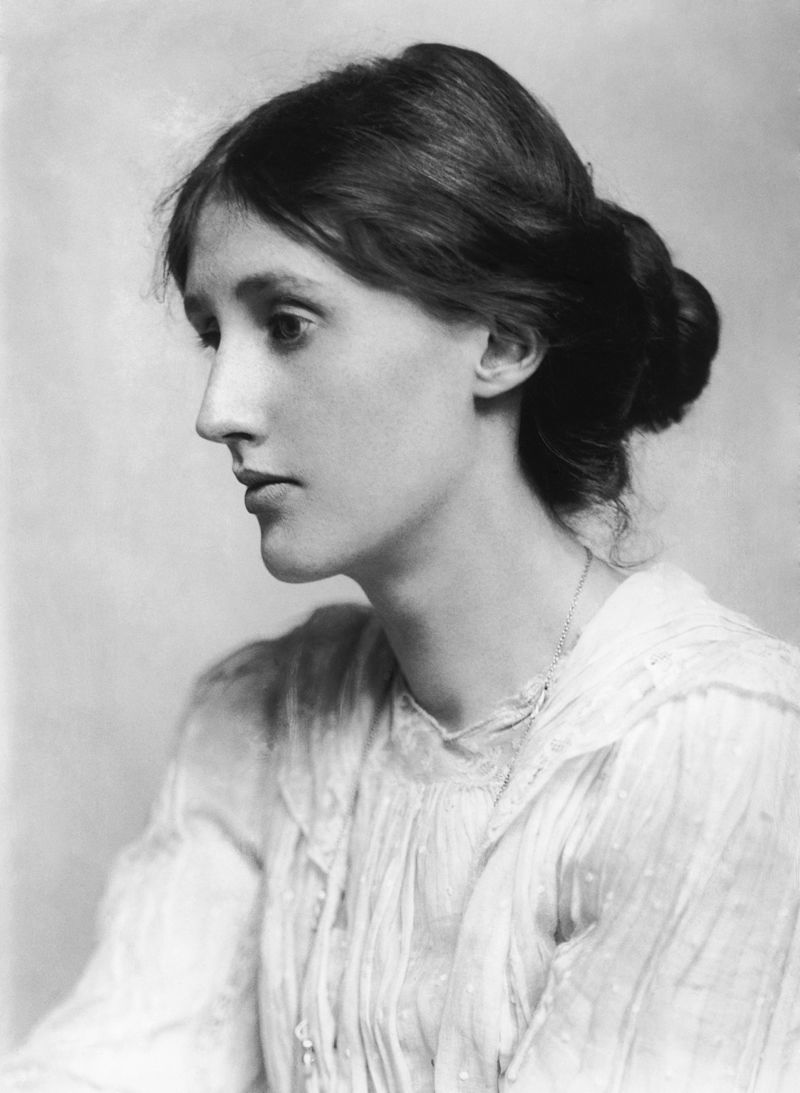
I remember reading Woolf’s essay, A Room of One’s Own, and not being able to get her words out of my head. As a female writer in the 21st century context, this idea of the value and importance of literal and figurative space is one that I return to frequently as both a source of reflection and creative inspiration. So who’s afraid of Virginia Woolf? Not me.

Susie Orbach

I read Orbach’s Fat is a Feminist Issue at university as part of my first year undergraduate Women’s Studies course. It was a book which really resonated with me and got me thinking seriously for the first time about body image, about the way we see ourselves and the social moulding of women and girls which begins at such a young age. I remember being struck by the notion that losing weight could really be about losing space – in the literal sense women striving to diminish themselves and take up less room in the world. Powerful stuff which has stuck with me all these years later.

Naomi Wolf

Another favourite from my time as a Women’s Studies undergrad, Wolf’s sharp look at beauty and physical perfection as a means of social control is the sort of book which will change the way you look at beauty ads! I loved this book – it was a real eye-opener and the first time I had read anything which challenged me to look, REALLY look at the images that I, as a young woman, was being bombarded with on a daily basis.

Christina Rossetti

If I’m in the mood for reading classic poetry, it’ll probably be something by Christina Rossetti. Her work is beautiful and stunning, and In the Bleak Midwinter is still my favourite Christmas carol.

Charlotte Bronte

It’s quite hard to choose between the Bronte sisters but for me Charlotte is my favourite, largely because I absolutely adore Jane Eyre. Writing at a time when female writers were subject to considerable prejudice (a fact which Bronte herself observed when choosing her masculine-sounding nom de plume Currer Bell), Charlotte and her sisters’ works stood out and are celebrated as classics to this day.

Elizabeth Gaskell

Another celebrated writer of the Victorian era, Gaskell wrote novels, short stories and biographies during her career, including the first biography of Charlotte Bronte. My favourite of her books is without doubt North and South – for me this novel is the epitome of the Gaskell’s sharp and capable social commentary framed within a wonderful story of romance across the class divide.

Mary Wollstonecraft 

A writer and a woman who needs no introduction. I read Wollstonecraft’s Vindication of the Rights of Woman as a student of history. I am still in awe of that book.

Tracy Chevalier

Best known for The Girl with the Pearl Earring, for me Chevalier is one of the best historical writers of modern times. Like Philippa Gregory, her work has inspired me on a personal level. Her stories are captivating; literary and yet wholly accessible. Falling Angels is my favourite of her books; I found its exploration of the late Victorian cult of death utterly fascinating.

MJ Rose 

Rose is the author I credit with introducing me to historical fantasy. In recent years I have read a lot of her books but without doubt my favourites are her Daughters of La Lune series. The stories are (quite literally) magical while the settings, from Belle Epoque Paris to New York in the roaring twenties, are rich and evocative. As a writer her books have given me a new perspective on writing about magic and weaving a touch of the fantastical into stories.

So, that’s my list! Which female writers do you find influential or inspirational? Please feel free to comment below. 

Book Tours, The Witch Child & Women’s Suffrage – A Wee Update

Happy Tuesday folks! Today I’m bringing you a wee update post – it’s been a busy time here with lots of things on the go. So, here’s a quick run down of what I’ve been up to over the past few weeks, along with a few reminders about what’s coming up:

I’ve been out and about telling everyone about Ethersay… and the response has been wonderful. Thank you to those groups in my home county of West Lothian who have invited me along to talk about and read from my latest novel. For a writer there is nothing better than getting the opportunity to share your work. It’s also great to get to tackle the huge range of  different questions your book prompts from readers – so far there has certainly been no such thing as…

I’ve been working on the third Witches of Pendle installment… more about this soon, but hopefully I’ve found my pace with this book now and hope to have it drafted by the end of the Spring. I won’t lie – it’s been a slow start. After finishing Ethersay I had such a ‘book hangover’ and really struggled to focus my mind on a new project. I’m pleased to report that I’ve finally got into a good rhythm with this piece of work and it’s going really well. This book will be a short novel and will take us back to 1612 and the childhood of Jennet Device/Sellers, the child star witness during the first Pendle Witch Trials. And…that’s all I’m telling you for now! Watch this space.

I’m still inviting submissions for an anthology about Women’s Suffrage… more about this here. A timely reminder about this project perhaps as today marks 100 years since the Representation of the People Act (1918) was passed in the United Kingdom, granting the vote to women aged over 30 who met certain property qualifications. I plan to release an anthology of work on this subject in December 2018, to coincide with the first parliamentary election in which women were able to vote. I am seeking short stories from writers which address the theme of women and the vote. These stories don’t have to be historical, or indeed focused on the suffrage movement in the UK. I am looking for stories from across the globe and across the genres – tell me a contemporary story, a historical one, or indeed a futuristic one. Tell me a dystopian story, write me some sci-fi, or a comedy, a mystery or even a horror. Write me something which crosses the genres – I don’t mind, as long as it relates to the theme of women and the vote. The deadline is 30th April, so if you’d like to submit a piece of work check out the Anthology Submissions page for all the details.

Phew! That doesn’t seem so much, does it?! More updates from me coming very soon.


Submissions Invited for Women’s Suffrage Anthology

I’m excited to announce that I am now inviting submissions for a new anthology entitled Words and Deeds: Stories of a Woman’s Right to Vote.

As a writer, creating an anthology of work will be a new experience for me, and I am really looking forward to putting this together. The idea of producing an anthology is a recent one, and basically sprang from a short story I was putting together for submission to a literary magazine. I was writing a story about women’s suffrage, a subject which had been on my mind a lot recently as 2018 marks the centenary of the Representation of the People Act 1918 which granted suffrage in Britain to women over 30 who met certain property qualifications. Whilst it was another ten years until all women got the vote on the same terms as men, 1918 was undoubtedly a watershed moment in British history following half a century of campaigning by suffragists and suffragettes across these isles. Whilst I was writing it occurred to me that I wanted to do something more than write my own story in recognition of this and so the idea of an anthology was born.

All the information you need to submit is available here on my website. If you have a story you would like to tell which relates to women and voting, I’d love to hear from you! The deadline for submissions is 30th April 2018.

Book Review: The Words in my Hand by Guinevere Glasfurd

The Words in My Hand is the re-imagined true story of Helena Jans, a Dutch maid in 17th-century Amsterdam, who works for Mr. Sergeant, the English bookseller. When a mysterious and reclusive lodger arrives – the Monsieur – Mr Sergeant insists everything must be just so. It transpires that the Monsieur is René Descartes.

This is Helena’s story: the woman in front of Descartes, a young woman who yearns for knowledge, who wants to write so badly she makes ink from beetroot and writes in secret on her skin – only to be held back by her position in society.

Weaving together the story of Descartes’ quest for reason with Helena’s struggle for literacy, their worlds overlap as their feelings deepen; yet remain sharply divided. For all Descartes’ learning, it is Helena he seeks out as she reveals the surprise in the everyday world that surrounds him.

When reputation is everything and with so much to lose, some truths must remain hidden. Helena and Descartes face a terrible tragedy and ultimately have to decide if their love is possible at all.

This was one of those books which took me a while to get into. The story begins slowly, the focus almost entirely upon maid Helena and her mundane (although not uninteresting) routine, to the point where the reader begins to wonder if they will ever enjoy more than a fleeting glimpse of Monsieur Descartes. In those early chapters, we do see plenty of mid-seventeenth century Amsterdam, with Glasfurd’s rich descriptions leaving the reader feeling as though they are in the midst of it all. Nonetheless by a third of the way through the book, I was beginning to wonder when the story would begin.

Patience, however, proved to have its rewards and as the story between Helena and Descartes took off, the value in those earlier chapters becomes clear. We learn, for example, of Helena’s thirst for knowledge, her eagerness to learn to write and, implicitly, her determination to improve her lot. Glasfurd’s fluent and engaging prose paints a clear picture of Helena’s character and by the end of the novel I was heavily invested in her, sharing her triumphs, her tribulations and her disappointments.

By contrast, Glasfurd keeps Descartes at arms’ length. There is always an air of mystery about him; a sort of unknown quantity. I suspect that this was intentional but at times it could be frustrating – for reader and Helena alike! Nonetheless, the relationship which develops between Helena and Descartes is as heart-warming as it is unconventional, albeit still constrained by the social norms of their time, a fact which was always going to be to Helena’s great disadvantage. The ending is quite a punch in the gut for even the most stoic bookworm and, reader beware, don’t look up either Descartes or Helena on Wikipedia until you have reached the end, otherwise you will spoil the ending!

Overall, an enjoyable and thought-provoking read, slow to start but well-written and vividly drawn. Four stars.